


INTEGRATING SHEET METAL LEVELING INTO THE INDUSTRIAL VALUE CHAIN
Anticipating sheet metal flatness as a process challenge is fundamental to ensuring efficiency and quality in the metal fabrication industry. Correcting flatness defects at the end of the production chain generates significant costs and delays, highlighting the importance of a proactive approach.
The distinction between material flatness and part flatness is essential for targeting the right corrective actions, since deformation may originate either from the material itself or from downstream processing operations.
Understanding that flatness defects are never random but result from accumulated mechanical and thermal stresses makes it possible to implement effective correction strategies. Whether these stresses originate from initial manufacturing operations such as rolling and slitting, or from downstream processes such as cutting and punching, early identification is critical. A distorted sheet affects the accuracy of every operation, from cutting to assembly, and can generate scrap or costly manual rework.
Positioning flatness correction at the appropriate stage of the industrial workflow, using the most suitable approach, is what differentiates efficient process management. This explains the complementarity between different sheet metal leveling machines, each addressing specific challenges at different stages of production.
Ignoring this process dimension ultimately leads to reduced productivity and increased nonconformities, whereas earlier intervention could have prevented these issues.
Integrating sheet metal leveling during the earliest stages of the value chain is a strategic approach that goes far beyond simply correcting defects. This proactive method ensures that raw material enters production processes with optimal sheet metal flatness, significantly reducing the risk of downstream deformation. It provides a stable foundation for all subsequent operations, from laser cutting to precision bending.
Considering sheet metal leveling as an essential link in the production chain improves not only the intrinsic quality of parts but also the overall flow of operations. A perfectly flat sheet minimizes instability on machine tables and reduces dimensional errors, resulting in fewer rejects and less rework. This early integration improves control over manufacturing costs by eliminating expensive corrective operations downstream.
Furthermore, early integration supports the optimization of downstream equipment performance. Cutting and forming machines can operate at higher speeds and with greater precision when the material is free from flatness defects. The value of sheet metal leveling is therefore reflected in improved productivity, reduced setup times, and increased compliance of finished products, strengthening industrial competitiveness.
Optimiser la productivité globale passe inévitablement par une gestion rigoureuse de la planéité, car elle impacte directement l’efficacité de chaque étape du processus. En assurant une planéité irréprochable de la tôle en amont, les opérateurs peuvent réduire significativement les temps de réglage des machines de découpe, de poinçonnage ou de pliage. Ces machines sont alors moins sujettes aux instabilités et aux ajustements constants, permettant un fonctionnement plus fluide et plus rapide.
Improved upstream flatness allows equipment to operate more predictably and consistently, reducing the need for operator intervention to compensate for defects. This frees up valuable operator time and improves production planning, streamlining workflow and minimizing bottlenecks.

When should sheet metal flatness be addressed in the industrial process ?
Fundamentally, the distinction between upstream stabilization and downstream correction forms the foundation of any sheet metal flatness strategy.
This dual approach determines not only which flatness correction technologies should be used, but also the overall philosophy of quality management.
It demonstrates that the effectiveness of an intervention is directly linked to its strategic positioning within the production flow, influencing both profitability and operational reliability.
Upstream Flatness Treatment: Stabilization Before Cutting and Punching
Intervening upstream aims to stabilize the material before major processing operations take place. This includes cutting, punching, and slitting operations, where the objective is to homogenize internal stresses and eliminate overall curvature.
This preventive approach creates a stable and repeatable flat condition, which is essential for securing downstream operations.
Material that is not stabilized before entering production can cause reduced cutting accuracy and inconsistent positioning, amplifying defects at every subsequent stage.
After cutting operations, blanks may undergo internal stress redistribution, resulting in localized deformation. Stabilization at this stage is critical for ensuring part quality before subsequent processing steps.
This operation releases residual stresses and restores compliant geometry, helping prevent nonconformities and costly rework. Optimizing sheet metal flatness upstream provides a stable foundation for downstream manufacturing operations.
Upstream sheet metal flatness is a critical factor in achieving repeatability and precision in bending and welding operations. A stable sheet ensures consistent part positioning, reducing process variation and manufacturing errors.
Rigorous flatness control at the beginning of the production chain significantly improves overall productivity and the reliability of automated systems. It minimizes manual adjustments and ensures consistent finished-product quality.
Furthermore, flat material free of internal stresses allows bending and welding equipment to operate more efficiently. Robots can follow more precise paths, clamping forces remain uniform, and post-weld deformation is significantly reduced, contributing to smoother and more cost-effective production.
Downstream Flatness Treatment: Correcting Deformation After Processing
Intervening after multiple processing operations, once the sheet has been cut and internal stresses have been released, reveals the primary purpose of this approach: correcting existing deformation.
At this stage, flatness correction becomes an essential corrective action.
These operations aim to restore compliant geometry, secure downstream assembly, and ensure bending suitability, preventing nonconformities during critical stages such as quality inspection.
Deformation frequently appears downstream in the process, particularly after cutting operations where internal stresses redistribute, causing sudden relaxation and localized distortion. These defects, which are often unpredictable and highly dependent on part geometry, may vary according to material grade or thickness and become critical during bending and assembly operations.
Achieving final compliance is especially important for individual parts or small production batches, particularly when part geometries are complex or when cutting operations involve significant material removal.
Ensuring excellent sheet metal flatness at this stage is a prerequisite for meeting strict assembly requirements.
This step ensures that every component complies with dimensional tolerances before being integrated into a larger assembly. It prevents costly adjustments and production delays caused by nonconforming parts, reinforcing both final product reliability and customer satisfaction.

The cost of addressing sheet metal flatness at the wrong stage of the industrial
Addressing sheet metal flatness at an inappropriate stage of the manufacturing process generates significant consequences. Intervening too late results in additional costs associated with manual rework and increased material scrap, directly impacting profitability.
Conversely, premature intervention that is not justified can also become costly, leading to oversized investments and unnecessary production-line complexity. Determining the optimal timing for intervention is therefore critical and extends far beyond simple technical considerations.
Nonconforming parts resulting from poorly managed sheet metal flatness inevitably generate scrap. These raw material losses represent a significant direct cost, in addition to production expenses already incurred
Furthermore, manual rework required to correct flatness defects considerably slows production rates. It ties up skilled labor on non-value-added activities, increasing labor costs while reducing overall efficiency.
Sheet metal with uncontrolled flatness disrupts the entire production flow. Cutting and punching operations lose precision, increasing cycle times and requiring constant adjustments.
In addition, dimensional instability places greater stress on tooling. This abnormal loading leads to premature equipment wear, resulting in higher maintenance costs and unexpected production interruptions.
The productivity impact is twofold: cycle times increase while the reliability of automated systems declines. Non-flat parts can cause jams, positioning errors, and eventually equipment damage, requiring costly repairs and production downtime.
Strategic integration of sheet metal leveling machines within the industrial workflow
The intelligent integration of sheet metal leveling machines into the production workflow—whether to stabilize material before cutting or to restore sheet metal flatness afterward—significantly reduces the risk of nonconformities.
This integrated approach to improving sheet metal flatness enhances not only part quality, but also overall productivity and automated system reliability. It transforms sheet metal leveling from a simple corrective operation into a genuine strategic advantage.
Our cases studies
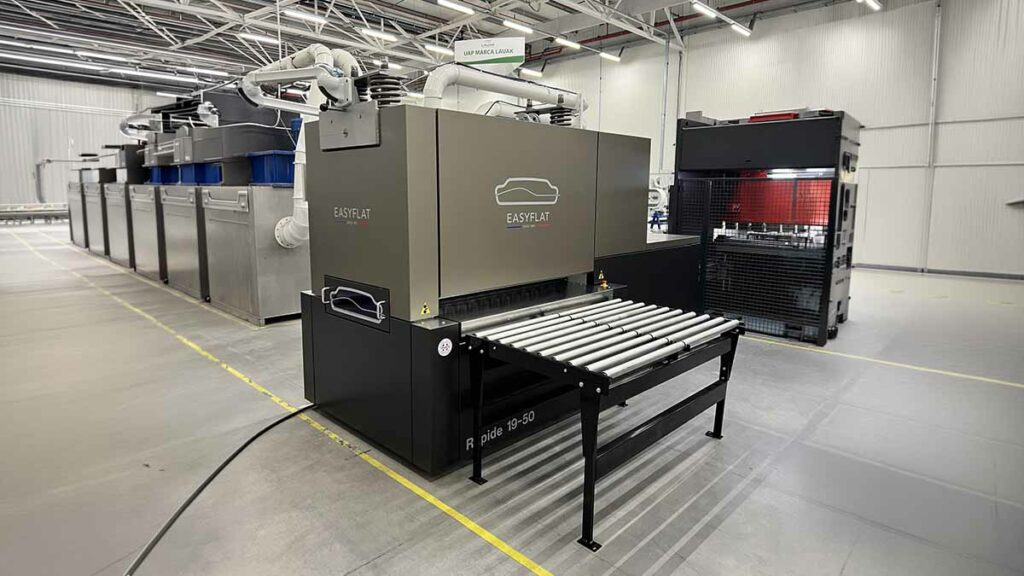
Lauak
Fondé en 1975 sous le nom d’ESKULANAK par son actuel co-gérant, Jean-Marc Charritton…
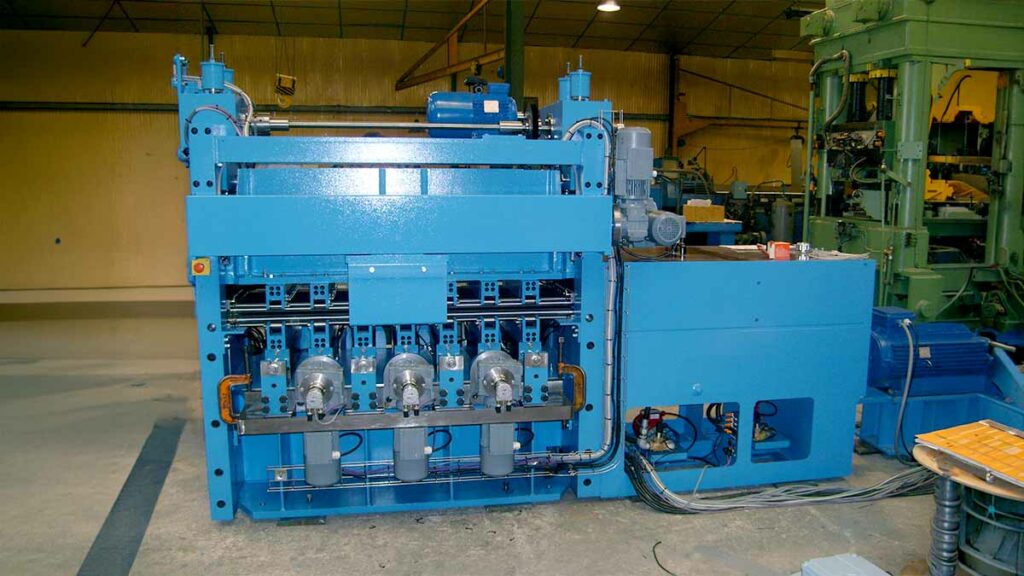
ASH and Lacy (UK)
ASH and Lacy est un acteur industriel majeur au Royaume-Uni, spécialisé dans la…
Oxymetal
Oxymetal, premier groupe français de découpe laser, traite quotidiennement des pièces de…