


FLATNESS OF COIL-FED SHEET METAL : CORRECTION AFTER SHEET BLANKING
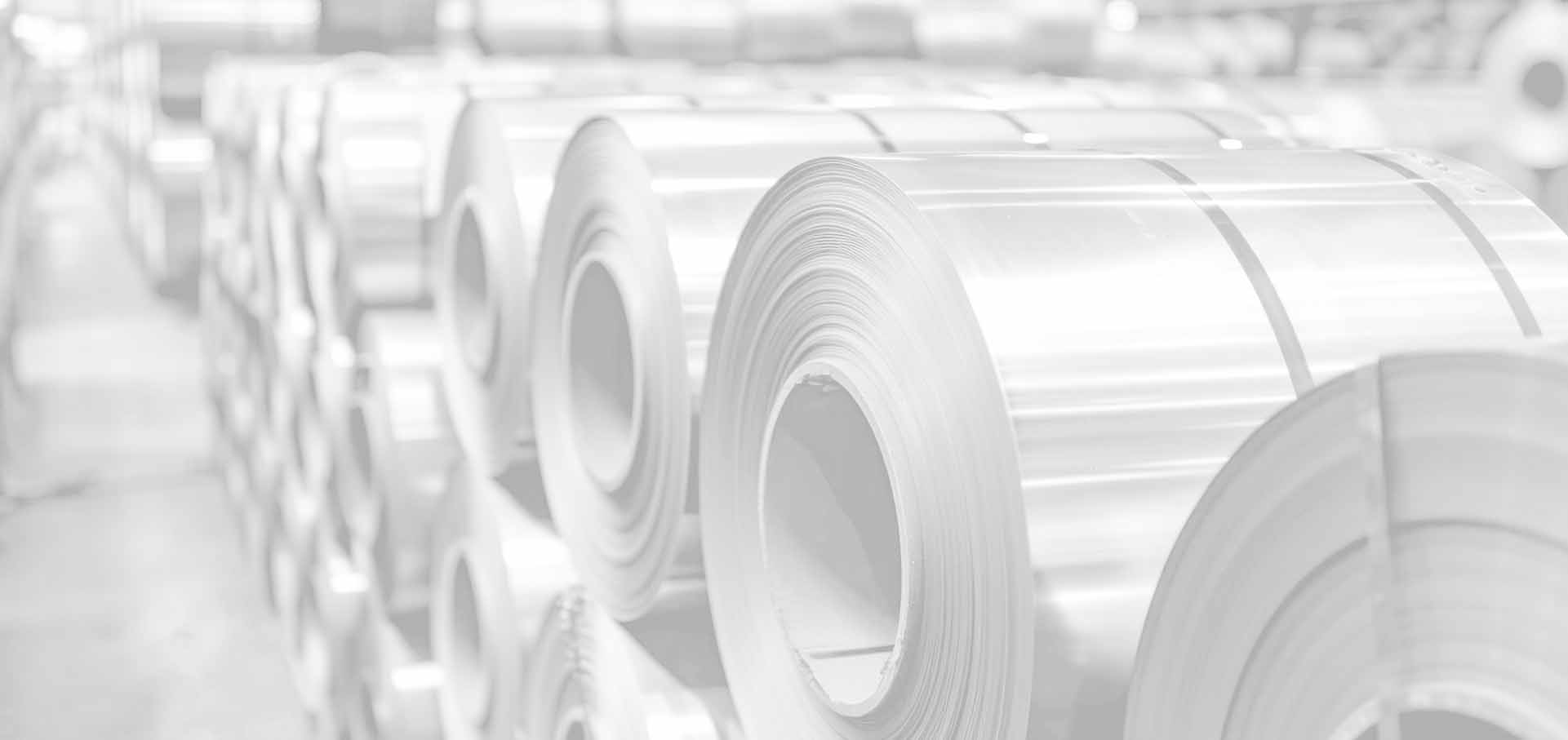
In industrial environments processing coil-fed sheet metal, sheet metal flatness is a critical factor that affects the entire serial production process.
Unlike plate processing, where a flatness defect affects a single component, a poorly leveled coil or improperly straightened steel strip can generate repetitive defects across hundreds of parts, causing line instability, dimensional variation, forming defects, and machine downtime.
These coil flatness defects originate during rolling, cooling, coiling, or transportation and may appear as edge waviness, center buckles, camber, or unevenly distributed residual stresses throughout the steel strip.
Although these defects originate while the material is still in coil form, correction most often takes place after sheet blanking or during cutting operations, when internal stresses are released and reveal structural flatness defects.

Coil-Fed Sheet Metal Flatness: A Critical Challenge After Sheet Blanking
Achieving optimal flatness on sheet material produced from coil stock is essential for maintaining quality and efficiency in cutting, roll-forming, and stamping operations.
Material coming directly from rolling mills may exhibit edge waviness, center buckles, camber, or uneven residual stresses.
These defects, often invisible to the naked eye, become apparent during processing or after sheet blanking, compromising serial production.
Controlling coil-fed sheet metal straightening therefore becomes a strategic lever for ensuring manufacturing reliability.
Poor coil-fed sheet metal flatness directly affects the geometric accuracy of manufactured components.
It generates dimensional variation that can result in non-compliance with technical specifications and tight tolerances.
These inaccuracies may create assembly difficulties, robotic alignment problems, and functional failures in finished products.
In addition, unstable material introduces heterogeneous residual stresses that manifest themselves through unexpected deformation after laser cutting, punching, or stamping operations.
Controlling sheet metal flatness after sheet blanking is therefore essential for ensuring consistent quality, reducing scrap, and improving automated process reliability.
Steel strip exhibiting flatness defects, such as waviness or camber, may create instability as it passes through production equipment.
This instability significantly increases the risk of collision with cutting, roll-forming, or stamping tools.
Insufficient steel strip straightening exposes tooling to premature wear and irreversible damage.
The associated costs include not only tool replacement but also machine downtime required for maintenance interventions, directly impacting profitability and production throughput.
Precision tooling designed to operate with perfectly flat material experiences additional stress whenever coil-fed sheet metal flatness has not been properly stabilized before or after sheet blanking.
Preventing these risks requires effective coil-fed sheet metal straightening integrated at the appropriate stage of the production process.

Coil-Originated Flatness Defects: Edge Waviness, Camber, and Residual Stresses
Several imperfections may affect sheet metal immediately after rolling mill production.
These steel strip flatness defects commonly appear as edge waviness, pronounced center buckles, or unwanted camber.
Cross-sectional flatness is not always uniform, and heterogeneous residual stresses may remain within the strip.
These anomalies originate from multiple stages of the manufacturing process, including rolling, cooling, coiling, and transportation.
They become particularly critical after sheet blanking or during cutting operations, when internal stresses are released and visible deformation appears.
Identifying and correcting coil-fed sheet metal flatness defects is essential for maintaining stability throughout downstream manufacturing operations.
Edge curl, bowing, and edge camber are among the most common geometric defects observed in steel strip produced from coils.
Edge curl is characterized by a tile-like deformation in which the sheet exhibits overall curvature affecting global flatness.
This deformation makes the strip difficult to handle and align within production lines or during downstream processing after sheet blanking.
Bowing refers to a more pronounced longitudinal curvature, while edge camber specifically affects the strip edges.
These irregularities compromise dimensional stability and may result in frequent machine stoppages.
Correcting coil-fed sheet metal flatness defects through properly controlled coil straightening is essential for maintaining industrial production rates.
The Central Role of Multi-Roll Straightening After Sheet Blanking
Within industrial processing environments handling coil-fed sheet metal, the sheet metal leveler plays a strategic role in controlling industrial sheet metal flatness.
The machine operates on strip material or on sheets produced from coils after sheet blanking by utilizing a series of alternating rolls that generate controlled bending and progressive tension equalization.
Its function is to homogenize residual stresses, stabilize the material fibers, and ensure consistent flatness.
It also reduces elastic memory, improving the mechanical stability of the sheet beyond simple geometric correction.
The coil straightening process relies on a succession of alternating bends that subject the steel strip to repeated and controlled plastic deformation.
This mechanical action redistributes and balances heterogeneous residual stresses within the material.
Gradually, the strip or blanked sheet becomes stabilized, eliminating defects such as edge waviness and center buckles.
The objective is to neutralize internal stresses and provide a homogeneous material foundation for downstream manufacturing operations.
The performance of a multi-roll sheet metal leveler depends directly on precise machine setup.
Adjustment of roll spacing, roll diameter, and penetration depth directly influences the effectiveness of steel strip straightening and the resulting flatness quality.
Each parameter must be adapted to the specific characteristics of the material, including:
- sheet thickness,
- strip width,
- steel grade.
Proper optimization minimizes residual stresses and prevents the introduction of new defects, ensuring outstanding dimensional and mechanical stability of the strip or blanked sheet.
Difference Between Coil Defects and Sheet-Level Correction: A Process-Oriented Approach
The distinction between coil processing and plate processing lies in both production logic and defect management.
While plate processing focuses on correcting isolated defects, coil processing requires a preventive and global approach to coil-fed sheet metal flatness, which is essential for serial production.
This strategic approach is fundamental because a defect originating in a coil does not affect just one component – it can impact hundreds or even thousands of parts.
A multi-roll leveler stabilizes the material globally, reducing repetitive defects and costly machine downtime, whether correction takes place directly on the strip or, more commonly, after sheet blanking or during cutting operations.
Upstream of production lines, coil flatness is a critical factor affecting the entire manufacturing process.
Initial material defects, even when invisible to the naked eye, may cause line instability, dimensional variation, and forming defects after cutting operations.
These imperfections originate from rolling, cooling, and coiling operations.
Integrating a continuous multi-roll sheet metal leveler or using material preparation after sheet blanking becomes essential for homogenizing residual stresses and ensuring consistent material flatness, particularly when the objective is reliable coil-fed sheet metal straightening in serial production.
Equipment adaptability is essential for efficiently managing different material formats.
Sheet metal levelers are designed to operate continuously on strip material or to process sheets produced from coils after blanking, delivering optimal performance for coil-based production.
Precision levelers, by contrast, are typically used downstream for more targeted correction of plates and individual components.
This flexibility enables manufacturers to adapt to the specific requirements of each production environment, whether continuous processing or part-by-part manufacturing, while maintaining complete control of industrial sheet metal flatness.
Technological Components of the EasyFlat Leveler
The effectiveness of the EasyFlat sheet metal leveler results from the integration of multiple precision-engineered mechanical technologies.
These systems work together to homogenize residual stresses within coil-fed sheet metal and ensure consistent flatness across the entire strip width, transforming the material into a stable and reliable substrate for industrial manufacturing operations.